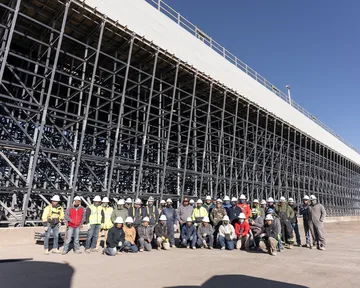

Cooling Tower Fill Replacement: When Is It Time, and What Should You Know?
Cooling Tower Depot
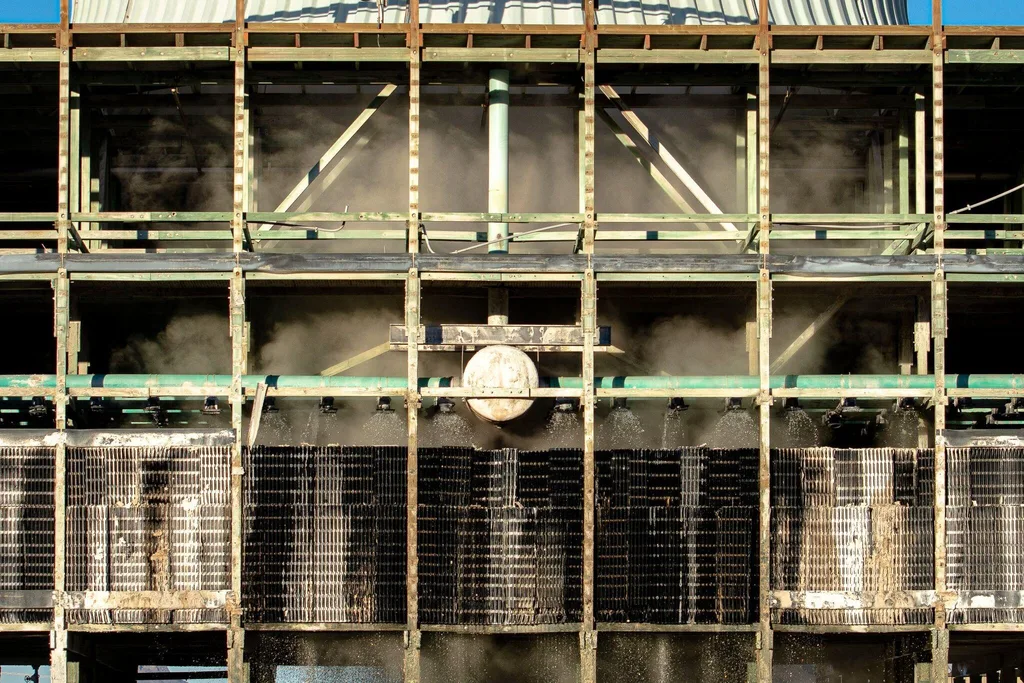
Cooling tower fill plays a critical role in heat transfer, water distribution, and overall cooling tower performance. When fill becomes fouled, damaged, or deteriorated, the tower may struggle to achieve its required cold-water temperature, consume more energy, and place additional demands on plant operations.
For industrial facilities, knowing when to replace cooling tower fill can help prevent performance losses, reduce maintenance costs, and extend the service life of existing equipment.
The right solution depends on the tower design, water quality, operating conditions, and the type of contaminants the system encounters. Understanding the warning signs, fill options, and factors that influence replacement can help plant managers make a more informed decision.
Signs Your Cooling Tower Fill Needs Replacement
Cooling tower fill does not always need to be replaced due to age. Its condition depends on water quality, operating temperatures, chemical treatment, and maintenance practices.
Several warning signs for when fill replacement should be evaluated:
- Declining Thermal Performance
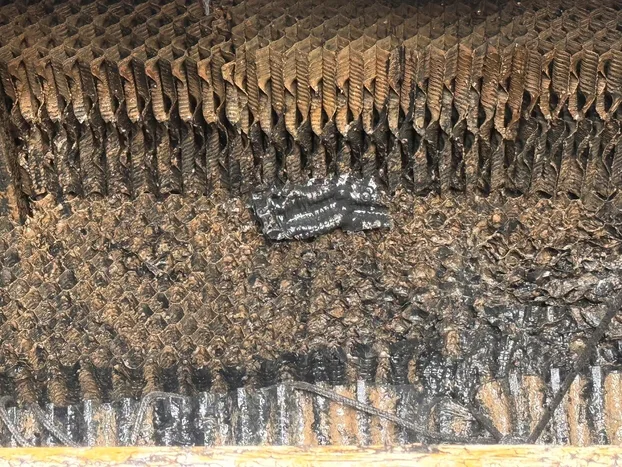
- Scale Buildup and Fouling
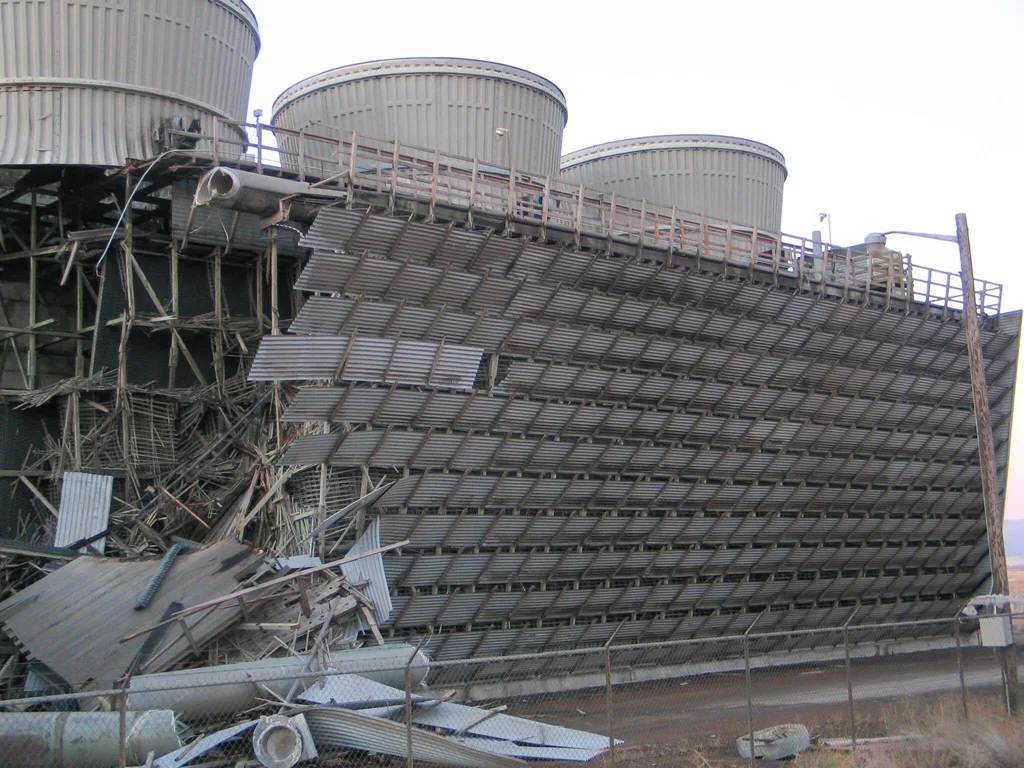
- Cracked, Brittle, or Collapsed Fill
- Restricted Airflow
- Increasing Maintenance Requirements
Repeated cleaning, recurring fouling, and ongoing attempts to restore damaged fill can indicate that the media is approaching the end of its useful service life.
A fill replacement project may also provide an opportunity to select a media design better suited to the facility's water quality and operating conditions.
Types of Fill Media
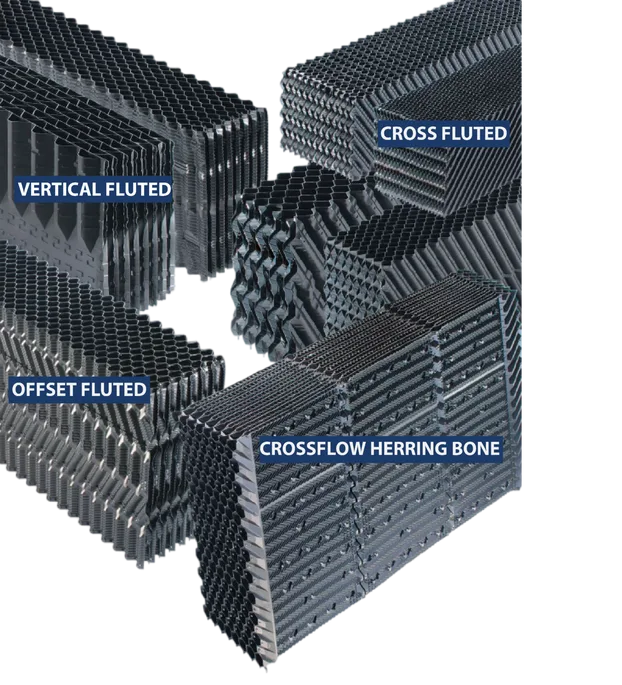
Not all film fill is designed the same way. Differences in flute geometry, sheet arrangement, and surface design affect heat transfer, airflow resistance, fouling tolerance, and overall cooling tower performance. Selecting the right media requires balancing thermal efficiency with circulating water quality and the tower's operating conditions.
High-Efficiency Fill for Clean Water Applications
Facilities with relatively clean circulating water can often use high-efficiency film fill. These designs maximize the contact between air and water to support effective heat transfer.
Improved thermal performance can allow for a smaller tower footprint and may reduce the fan power required to achieve the desired cooling duty, depending on the system design.
Cross-Fluted Fill
Cross-fluted fill uses angled corrugations in adjacent sheets to promote air-water interaction and distribute water laterally across the media. This arrangement provides a large heat-transfer surface and supports high thermal performance.
Best suited for: HVAC systems and industrial applications with relatively clean water and effective water treatment.
Herringbone Fill
Herringbone fill features an engineered surface pattern that helps spread water throughout the media for consistent heat transfer. Certain designs are intended as replacements for hanging/suspended splash fill within crossflow configurations.
Best suited for: Crossflow towers serving commercial HVAC, light industrial, and process cooling applications.
Fouling-Resistant Fill for Challenging Water Conditions
When cooling tower water contains elevated levels of suspended solids, sediment, or biological contaminants, cross-fluted film fill may be more susceptible to clogging. Restricted passages can interfere with airflow and water distribution, reducing thermal performance and increasing maintenance demands.
Fouling-resistant fill designs use different flute geometries and flow paths to help manage these conditions while maintaining effective cooling.
Offset-Fluted Fill
Offset-fluted fill combines lateral water distribution with a predominantly downward flow path. This configuration promotes water movement through the media while supporting effective heat transfer and relatively low airflow resistance.
Key benefit: Balances thermal performance with reduced fouling potential.
Vertical-Fluted Fill
Vertical-fluted fill directs water downward through larger, more open passages. The design supports higher water-film velocities and helps limit the accumulation of contaminants within the media.
Key benefit: Provides an option for applications where clogging resistance and reliable drainage are important.
Hybrid Fill
Hybrid-fluted fill combines features intended to improve air mixing with the more open flow characteristics associated with fouling-resistant designs. The objective is to deliver strong thermal performance without sacrificing resistance to plugging.
Key benefit: Offers a balance of heat-transfer efficiency and fouling resistance for demanding water conditions.
Trickle Fill
Trickle fill uses specialized flute geometry to guide water along the media's structural surfaces. This promotes thin water films and increases the surface area available for evaporative cooling in applications where water quality presents challenges.
Key benefit: Supports heat transfer in selected poor-water-quality applications.
Crossflow Splash Bar Fill
Splash bar fill uses a series of bars or impact surfaces to break water into droplets as it descends through the tower. This repeated breakup increases exposure to the cooling air and promotes heat transfer.
Best suited for: Demanding applications such as power generation, petrochemical processing, and other industrial cooling operations.
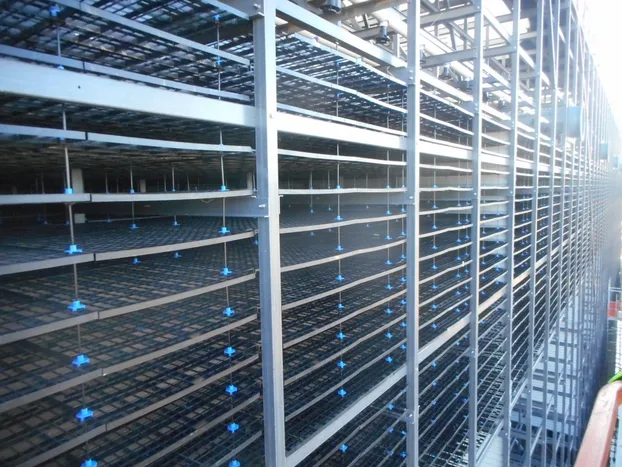
Counterflow Splash Fill
CTD’s Opti-Grid splash fill breaks falling water into smaller droplets as it cascades over and through layers of splash grids. This increases the water's surface area and promotes evaporation and heat transfer without relying on film fill. It is also highly resistant to fouling.
Best suited for: Heavy industry, steel mills, manufacturing, pulp and paper.
How to Choose the Right Film Fill
The best fill configuration depends on the tower's thermal requirements, water quality, and operating environment—not just the media type.
Consider the following factors when comparing options:
- Thermal duty: Confirm the required water flow, hot- and cold-water temperatures, and entering-air wet-bulb temperature.
- Water quality: Evaluate suspended solids, biological growth, scale potential, and the effectiveness of the water treatment program.
- Airflow and fan capacity: Compare pressure-drop characteristics to ensure the existing fan system can deliver the required airflow.
- Operating temperature: Verify that the media material is rated for the tower's normal operating conditions and potential temperature excursions.
- Maintenance requirements: Consider accessibility, cleaning practices, and the likelihood of recurring fouling.
- Existing tower configuration: Confirm compatibility with the fill support system, water distribution, dimensions, and airflow arrangement.
Ultimately, the goal is to select media that delivers the required thermal performance while remaining reliable under actual operating conditions. A design that offers excellent heat transfer in clean-water service may not be the most appropriate choice for a system with heavy particulate loading. For replacement projects, compare manufacturer performance data and verify that the proposed fill is suitable for the tower's design conditions before making a final selection.
Unsure where to start? Give Cooling Tower Depot a call today to learn more and see which fill selection is right for your tower.
Cooling Tower Insights, Direct to Your Inbox
Receive technical best practices, maintenance advisories, and product updates from the specialists at Cooling Tower Depot.