
Tonnage Duty Calculator

Determine the cooling duty in tons for your application by entering flow rate, temperature differential, and fluid type.
This site is protected by reCAPTCHA and the Google Privacy Policy and Terms of Service apply.

Rental Tower Bid Request Form

More Tools and Calculators

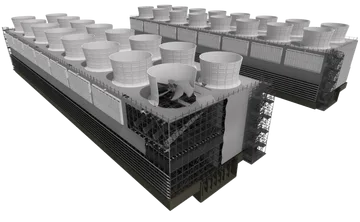
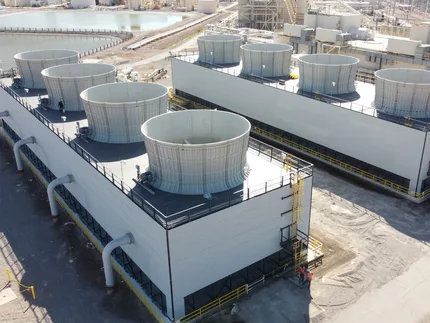
Two rows of white fiberglass cooling towers with large fan stacks, seen from above at an industrial plant

Need a Budget Price for a New Tower?

Share your flow and conditions and get a budget bid for your project.

Design & Price a Tower

Configure your cooling tower specifications and get an accurate parts and equipment quote tailored to your project requirements.

Design a tower

Water Usage Calculator

Estimate evaporation, blowdown, and makeup water consumption based on your tower's capacity and operating conditions.

Calculate water usage

Wet Bulb Temperature Chart

Look up wet bulb temperatures by region and season to optimize your cooling tower's thermal performance and sizing.

See the chart

Rental Tower Selection

Enter your flow and conditions to find the right rental tower module fast.

Find your rental tower

Budget Bid Request

Get a budget price for a new cooling tower based on your flow and conditions.

Start your bid

Bolt Sizing Chart

Quickly reference bolt dimensions, diameters, lengths, and specifications.

Find the right bolt size

Thread Sizing Chart

Quickly reference thread sizes and pitches.

Find the right thread size

Motor Selection Tool

Find the correct motor specification for your cooling tower fan based on horsepower, frame size, and speed requirements.

Find the right motor

NEMA Guide

Quickly reference NEMA motor frame sizes, dimensions, and mounting details.

Find the right frame size

Driveshaft Selection Tool

Identify the right driveshaft length, coupling type, and material for your cooling tower's mechanical drive system.

Find the right driveshaft
Frequently Asked Questions

What is a field-erected cooling tower?

A field-erected cooling tower is a large industrial cooling tower that is engineered, manufactured, and assembled at the project site rather than delivered as a fully assembled unit from a factory. Field-erected towers are typically used for large industrial applications requiring high cooling capacity, where factory-assembled or packaged towers may not be practical. Field-erected cooling towers can be custom designed for virtually any application, with the tower size, number of cells, fill type, construction materials, water distribution system, and mechanical equipment selected to meet the project's specific requirements.

What is the difference between crossflow and counterflow cooling towers?

The primary difference between crossflow and counterflow cooling towers is the direction that air and water move through the tower. In a crossflow tower, air moves horizontally across the falling water, while in a counterflow tower, air moves vertically upward against the downward flow of water. When selecting between crossflow and counterflow, CTD considers factors including water quality, required capacity, footprint, energy consumption, maintenance requirements, climate, operating conditions, and project cost to determine the best design for the application. Cooling Tower Depot specializes in both configurations.

What is an FM Approved Cooling Tower?

An FM Approved 4930 cooling tower has been tested and certified by FM Approvals, an independent testing and certification organization, to meet specific requirements for fire resistance, natural hazards testing, seismic analysis, and loss prevention. FM Approval is particularly important in industrial and commercial facilities where fire or natural disaster risk is a major concern, such as power plants, chemical plants, hospitals, universities, manufacturing facilities, and large commercial buildings. Additionally, operations looking to avoid the added cost and complexity of dedicated fire protection systems, FM-approved towers offer a proven alternative.

How much does a new industrial cooling tower cost?

The cost of a new industrial cooling tower can vary significantly depending on the requirements of the application. CTD has created the industry’s only online Design & Price Tool. This is a true optimization program, where you can design a new cooling tower based on a set of conditions and receive a budgetary proposal, data sheets, and a general arrangement drawing, all online!

Should I choose an FRP, wood, or concrete cooling tower?

FRP (fiberglass-reinforced plastic) is an excellent choice when corrosion resistance, long service life, and reduced maintenance are priorities. FRP does not rot or rust and is well suited for harsh industrial environments and aggressive water conditions. Properly designed FRP components can provide 35–40 years or more of service life, depending on the application. Historically, wooden/concrete towers were used for most industrial cooling towers, and still are relevant today.

Get in touch

Contact us for sales, service, parts, emergency services, etc.