
Periodic Maintenance Checklist For Your Cooling Tower
Cooling Tower Depot
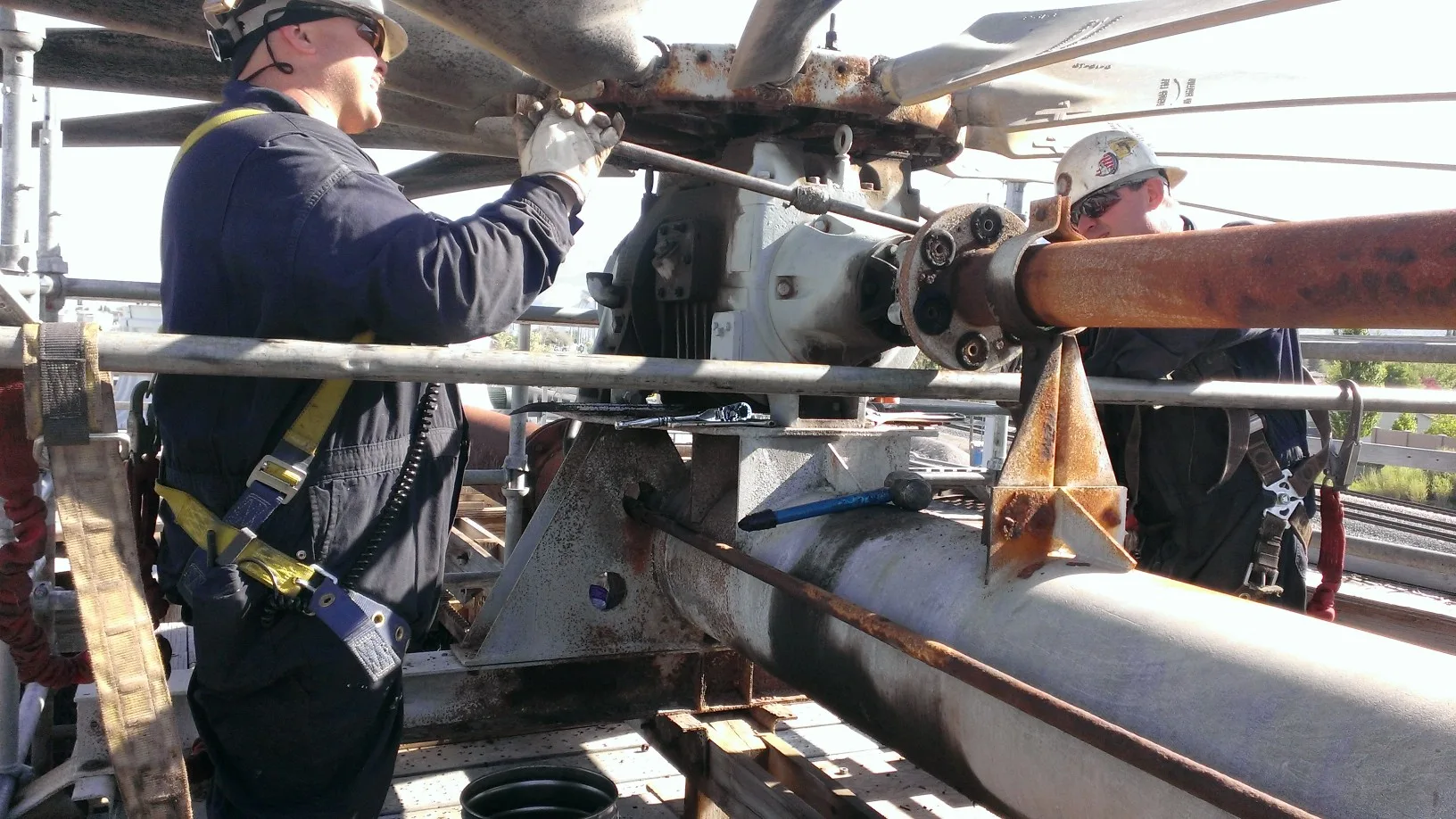
Well maintained cooling tower equipment gives the best operating results and minimizes maintenance cost. Be sure to set up a regular inspection schedule and a continuous lubrication and maintenance record for the cooling tower to ensure effective operation. We recommend that you periodically complete the following preventative maintenance practices
Hot Water Distribution
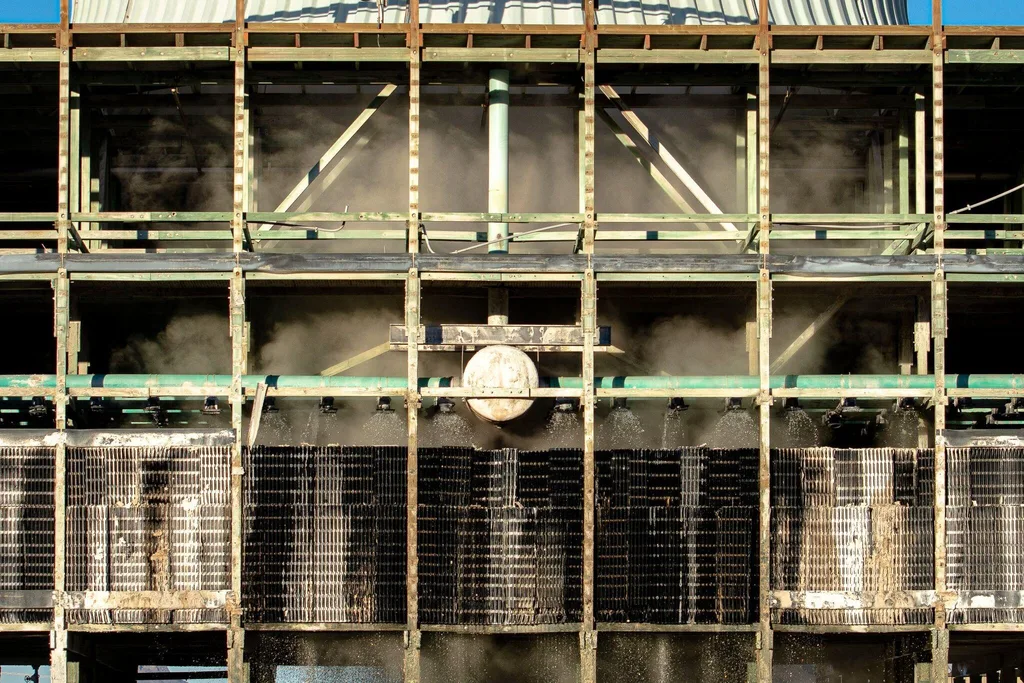
The distribution nozzles should be checked monthly for partial or total blockage. Note any plugged nozzles by location, shut off water, remove plugged nozzles, re-open valve to the cell to flush the system, then replace nozzles and return to normal operation. The nozzles must be kept in place to assure proper water distribution.
Tower Framework
Keep external framework bolts tight, including stairway, ladder, handrail bolts, etc. Pay particular attention to bolts in the mechanical equipment supports. Do not retighten structure bolts during shutdown periods on wood towers as the wood will shrink as it becomes dry and swell once tower is operating. Do not over tighten bolts as to deflect or crack material.
Drive Shaft
Check drive shaft alignment and condition of couplings every six months. See Drive Shaft Service Manual (Appendix C), for correcting misalignment, balancing or replacing parts.
Electric Motor
Lubricate and maintain each electric motor in accordance with the manufacturer's instructions (Appendix C). If repair work is necessary, contact the nearest representative of the motor manufacturer.
Casing
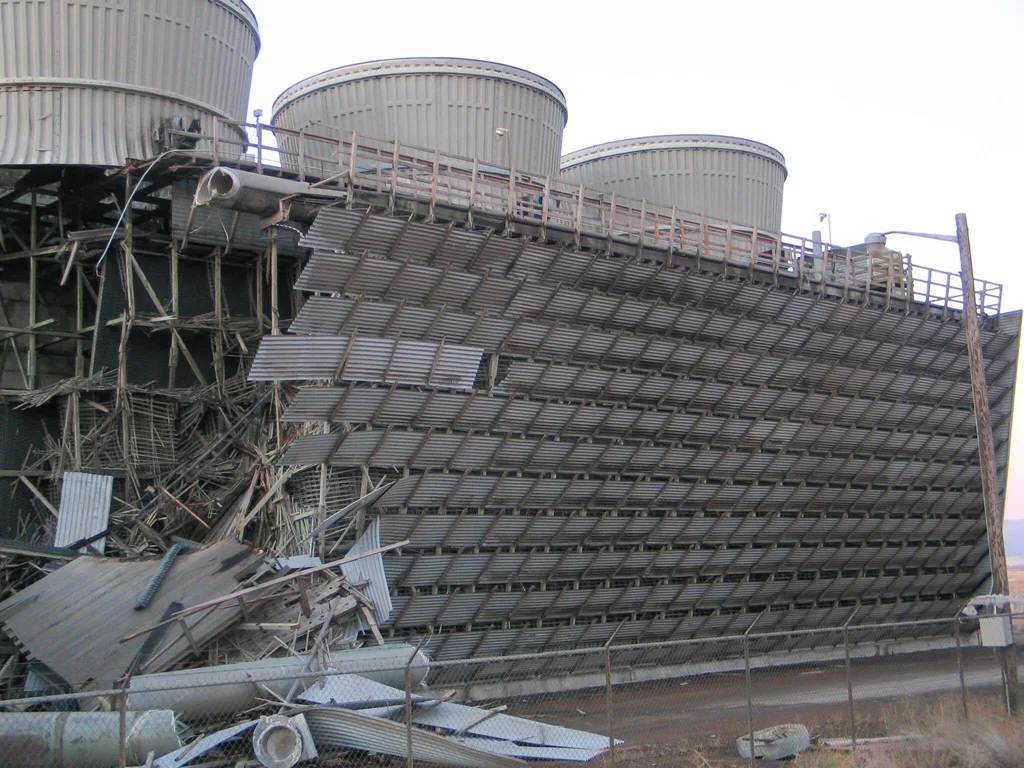
The casing normally requires no particular maintenance. Any damage to the casing, besides causing additional water losses, will result in an uncontrolled air intake, which may be detrimental to the thermal efficiency of the tower. It is thus necessary to make the repairs as soon as possible.
Drift Eliminators
We recommend that the drift eliminators be kept clean by removing mosses, algae, or molds that might accumulate on them. These accumulations increase the pressure loss through the drift eliminators and therefore are detrimental to tower efficiency. If the drift eliminators are accidentally damaged, it is necessary to make the repairs quickly to avoid excessive drift losses. It is not advisable to walk on the drift eliminators without plywood planking to spread the load. If cleaning is required please contact CTD regarding cleaning procedure as cleaning is dependent on drift eliminator type.
Fan
As a general rule, it is strongly recommended to check the torque of all bolts used for assembling the various fan elements, such as blades and hubs, during the second month after a new tower is put into operation. The torque shall be according to the value given in the operating instructions. It is advisable to check this at least once a year. At this time it is also recommended that you check the pitch of each blade as well as the tracking. Refer to the fan instructions that are enclosed in Appendix C.
Check fan blade weep holes periodically for blockage.
Do not climb on the blades or use them as scaffolding support or a working platform. The blades must be kept clean in order to avoid unbalancing and vibrations that may give rise to deterioration of the rotating parts.
For the same reason, do not keep a fan operating when one or several blades have been accidentally damaged. In case of vibration or motor shutdown due to electrical overload, check that the angle of the blades has not changed and is identical for each blade.
Basin
The air going through the cooling tower deposits a certain amount of dust/dirt which settles in the basin and causes the formation of a muddy deposit which must be regularly removed.
The frequency of this cleaning obviously depends on the quantity of dust contained in the air in the cooling tower. In general, however, cleaning once a year is enough.
In the case where, besides the air dust, the operating conditions cause additional materials to settle, more frequent cleaning will be required. Such additional material may enter the system either from the make-up water or by the cooling process.
Fanstack
The fanstack is subjected to vibratory forces generated by the fan (they generally cannot be measured without instruments). It is necessary to check the tightness of the fanstack bolts at least every six months.
Fill
The fill media should be inspected on a regular schedule based on the quality of the water that is being circulated. The inspection should include the removal of a piece to determine if algae or mud is building up. If algae growth is detected, please contact your water treatment company to control the problem. If the buildup is significant, it may be necessary to remove the fill media and clean or replace it. Please contact CTD for assistance should this become necessary. It is not advisable to walk on the fill without plywood planking to spread the load.
The causes of deterioration of the fill are generally of the following nature:
- Those attributable to the quality of water
- Those attributable to deposits and water overloads (i.e. ice)
- Those attributable to high water concentrations (broken pipes or nozzles) resulting from a problem with the water distribution system
Gear Reducer
Make daily and monthly oil checks. Inspect internal parts during seasonal oil change. Check vent line for blockage and clean out if necessary. A clear vent line is necessary for proper gear functionality.
Painting
Periodically clean and if necessary, recoat all metal parts subject to corrosion.
Once during every shift it is advisable to make a general inspection of the tower. It is recommended that:
- Basin water level be checked
- Gear box oil level be checked
- Locate and check any suspect noise or vibration
- A detailed logbook be kept for each cell. (To be supplied by purchaser)
If after installation, regular operation is delayed pending completion of plant construction or if there are long idle periods between operating cycles, it is necessary to start the motor/gearbox/fan group every week for a period of ten minutes to bring all inner parts of gearbox and the ball bearings into contact with the lubricant. If the motor is not electrically connected, the rotation must be done manually.
Preventative Maintenance: Get the Guide
Want to receive more industry tips? Become a CTD community member
Cooling Tower Insights, Direct to Your Inbox
Receive technical best practices, maintenance advisories, and product updates from the specialists at Cooling Tower Depot.